



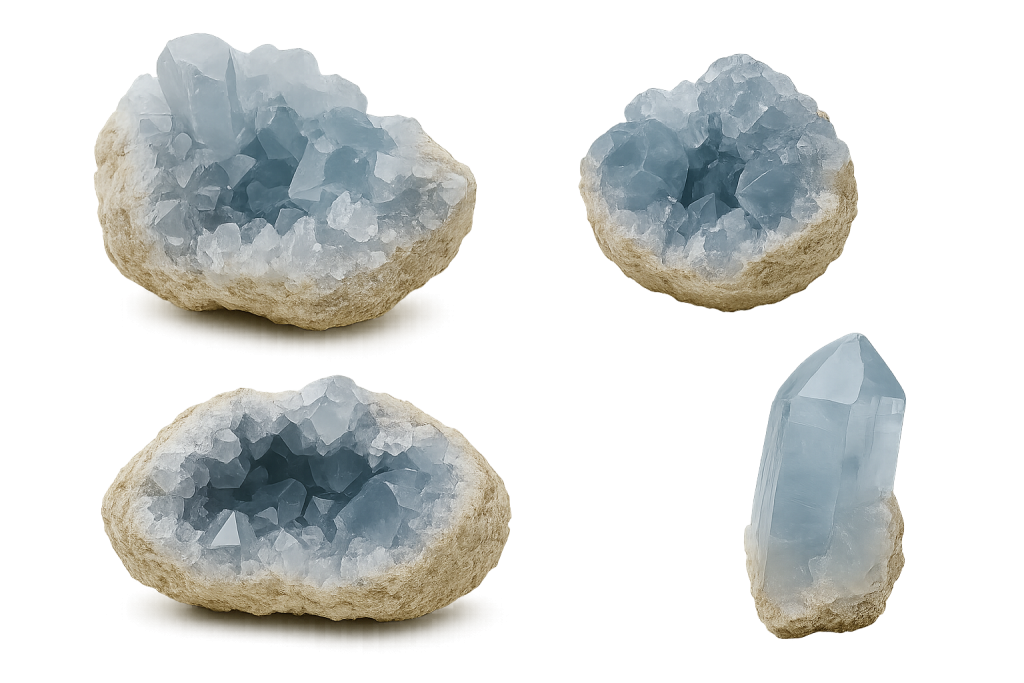
Introduction to Celestine (Celestite): A Stone from the Sky
Celestine or Celestite (Celestine/Celestite) is one of the most beautiful and unique mineral gemstones in the world. With its sky‑blue color and exceptional clarity, it has always attracted the attention of collectors, decorative‑stone enthusiasts, and industrial professionals. The name of this mineral comes from the Latin word “Caelestis,” meaning “heavenly,” referring to its soft blue hue and the spiritual energy often associated with it. Celestine is not only known as a valuable decorative and collectible stone, but it is also the primary global source of the strategic element Strontium (Sr), which has extensive applications in advanced industries, glass manufacturing, pyrotechnics, electronics, and even medicine. In this page, relying on reputable global sources and the expertise of the Amitis team, we provide a complete introduction to Celestine, its properties, applications, buying and selling tips, value assessment, comparison with similar stones, and the reasons why Amitis is the right choice for purchasing Celestine. Whether you are looking to buy genuine Celestine, sell collectible specimens, or learn about the market for this mineral, this guide covers everything you need.
Chemical Composition and Crystal Structure of Celestine
Celestine is known by the chemical formula SrSO₄ (strontium sulfate) and crystallizes in the orthorhombic system. This crystal structure produces prismatic, tabular, or massive crystals with smooth and shiny faces. Celestine can also appear in fibrous or granular forms. Composition‑wise, Celestine consists mainly of strontium (about 56%), sulfur, and oxygen, with occasional impurities such as barium, calcium, and rare earth elements. These impurities can influence the color and some physical properties of the stone.
Physical Properties of Celestine: Color, Hardness, Transparency, and Luster
Celestine is considered one of the most attractive minerals due to its sky‑blue color and distinctive clarity. However, it can also appear in other colors such as white, colorless, pale yellow, gray, brown, and even green. Its blue color is caused by trace amounts of strontium within the crystal structure.
Hardness: Celestine is a relatively soft mineral with a Mohs hardness of 3 to 3.5. This makes it sensitive to scratches and impact, requiring extra care during cutting and handling.
Luster: The luster of Celestine ranges from vitreous to pearly, giving it a bright and eye‑catching appearance under light.
Transparency: The stone is typically transparent to translucent, and specimens with higher clarity are more valuable.
Specific Gravity: The specific gravity of Celestine is about 3.9 to 4.0 g/cm³, which is higher than many other sulfate minerals.
Cleavage: Celestine has perfect cleavage and easily splits into thin, smooth plates—an important factor during cutting and processing.
Sources and Locations of Celestine Around the World
Celestine is found worldwide, primarily in sedimentary and evaporitic environments. It commonly forms alongside gypsum, anhydrite, halite, and calcite within sedimentary rock layers. Celestine has been discovered in countries such as Iran, China, Spain, Brazil, Italy, and others. Iran holds a significant share of global Celestine deposits, with abundant mines located in Semnan Province, where Amitis Semnan Company exports high‑purity Celestine and engages in buying and selling Celestine in the region. In Iran, the mines of Semnan, Behbahan, and Qom are among the most important sources for extraction and export of Celestine, making the country one of the key players in the global market.

Industrial Applications of Celestine: From Fireworks to Advanced Technologies
Celestine, as the primary source of strontium, plays a key role in various industries. Strontium extracted from celestine is processed into compounds such as strontium carbonate, nitrate, oxide, and chlorate, each with specific applications.
Major Industrial Uses of Celestine
Fireworks and Explosives: Strontium compounds, especially strontium nitrate and chlorate, are responsible for producing pure and stable red flames in fireworks and military flares. Glass and Crystal Manufacturing: Strontium is used as an additive in producing heat-resistant glass, X-ray shielding glass (old monitors), optical lenses, and specialty glass. Electronics and Magnetics: Production of strontium ferrite magnets for electric motors, speakers, MRI machines, and ceramic capacitors. Metallurgy: Enhancing the quality of aluminum and zinc alloys, steel refining, and assisting melting processes in metallurgy. Medical and Pharmaceutical: Some strontium compounds (like strontium ranelate) are used in treating osteoporosis and strengthening bone structure. Oil and Gas Industry: Used as a weighting agent in drilling fluids for oil and gas wells. Ceramics and Paints: Production of advanced ceramics, heat-resistant glazes, and red pigments. Advanced Technologies: Applications in semiconductor manufacturing, sensors, photonics, optoelectronics, and even nanotechnology and clean energy.
Decorative and Collectible Uses of Celestine: Geodes, Clusters, and Jewelry
Celestine holds a special place in the world of decorative and collectible stones due to its sky-blue color, transparency, and unique luster. Large geodes and crystal clusters from Madagascar, Ohio, and Iran are among the most popular specimens in the global market.
Celestine Geodes: Hollow geodes lined with blue crystals, especially from Madagascar and Ohio, are rare and valuable, often used as decorative or collectible pieces. Crystal Clusters: Natural clusters with transparent blue crystals are ideal for home, office, or meditation room decoration. Jewelry: Due to its low hardness and sensitivity to impact, celestine is less commonly used in everyday jewelry but finds use in special collectible necklaces, pendants, and earrings. Artistic Objects and Sculptures: Some artists use celestine to craft small sculptures, eggs, hearts, and decorative items.
Metaphysical and Spiritual Properties of Celestine: The Stone of Calm and Angelic Connection
In metaphysical and spiritual beliefs, celestine is known as a stone of calm, inspiration, and connection to higher levels of consciousness. It is especially used in meditation, chakra work, and energy healing practices.
Introduction to Celestine (Celestite): A Stone from the Sky
Celestine or Celestite (Celestine/Celestite) is one of the most beautiful and unique mineral gemstones in the world. With its sky‑blue color and exceptional clarity, it has always attracted the attention of collectors, decorative‑stone enthusiasts, and industrial professionals. The name of this mineral comes from the Latin word “Caelestis,” meaning “heavenly,” referring to its soft blue hue and the spiritual energy often associated with it. Celestine is not only known as a valuable decorative and collectible stone, but it is also the primary global source of the strategic element Strontium (Sr), which has extensive applications in advanced industries, glass manufacturing, pyrotechnics, electronics, and even medicine. In this page, relying on reputable global sources and the expertise of the Amitis team, we provide a complete introduction to Celestine, its properties, applications, buying and selling tips, value assessment, comparison with similar stones, and the reasons why Amitis is the right choice for purchasing Celestine. Whether you are looking to buy genuine Celestine, sell collectible specimens, or learn about the market for this mineral, this guide covers everything you need.
Chemical Composition and Crystal Structure of Celestine
Celestine is known by the chemical formula SrSO₄ (strontium sulfate) and crystallizes in the orthorhombic system. This crystal structure produces prismatic, tabular, or massive crystals with smooth and shiny faces. Celestine can also appear in fibrous or granular forms. Composition‑wise, Celestine consists mainly of strontium (about 56%), sulfur, and oxygen, with occasional impurities such as barium, calcium, and rare earth elements. These impurities can influence the color and some physical properties of the stone.
Physical Properties of Celestine: Color, Hardness, Transparency, and Luster
Celestine is considered one of the most attractive minerals due to its sky‑blue color and distinctive clarity. However, it can also appear in other colors such as white, colorless, pale yellow, gray, brown, and even green. Its blue color is caused by trace amounts of strontium within the crystal structure.
Hardness: Celestine is a relatively soft mineral with a Mohs hardness of 3 to 3.5. This makes it sensitive to scratches and impact, requiring extra care during cutting and handling.
Luster: The luster of Celestine ranges from vitreous to pearly, giving it a bright and eye‑catching appearance under light.
Transparency: The stone is typically transparent to translucent, and specimens with higher clarity are more valuable.
Specific Gravity: The specific gravity of Celestine is about 3.9 to 4.0 g/cm³, which is higher than many other sulfate minerals.
Cleavage: Celestine has perfect cleavage and easily splits into thin, smooth plates—an important factor during cutting and processing.
Sources and Locations of Celestine Around the World
Celestine primarily occurs in sedimentary and evaporitic environments worldwide. Major deposits are found in countries such as Iran, China, Spain, Brazil, Italy, and others. In Iran, significant mines are located in Semnan Province, Behbahan, and Qom, making the country a key player in the global Celestine market. These deposits often form alongside minerals like gypsum, anhydrite, halite, and calcite within sedimentary rock layers. The Semnan mines, in particular, are known for their high-purity Celestine, which is actively exported by Amitis Semnan Company. Other notable global sources include the United States (Ohio, Michigan, California), Canada (Ontario, Quebec), Mexico, Madagascar, and parts of Europe.
This global distribution highlights the importance of Celestine both as a collectible mineral and as a strategic industrial resource.
Celestine is found worldwide, primarily in sedimentary and evaporitic environments. It commonly forms alongside gypsum, anhydrite, halite, and calcite within sedimentary rock layers. Celestine has been discovered in countries such as Iran, China, Spain, Brazil, Italy, and others. Iran holds a significant share of global Celestine deposits, with abundant mines located in Semnan Province, where Amitis Semnan Company exports high‑purity Celestine and engages in buying and selling Celestine in the region. In Iran, the mines of Semnan, Behbahan, and Qom are among the most important sources for extraction and export of Celestine, making the country one of the key players in the global market.

The Most Important Metaphysical Properties of Celestine
Chakra Activation:
Celestine is strongly connected to the Throat Chakra (communication and expression), the Third Eye Chakra (insight and intuition), and the Crown Chakra (spiritual connection). It is believed to help balance and cleanse these energy centers.
Calming and Stress Relief:
With its gentle and soothing energy, Celestine clears the mind of negative thoughts and anxiety, promoting emotional balance and inner peace.
Connection with Angels and Spiritual Guides:
Often referred to as the “Angel Stone,” Celestine is believed to enhance spiritual communication with angels and spirit guides, especially when placed in a meditation room or beside the bed.
Improved Sleep and Dream Work:
Celestine is used to enhance sleep quality, reduce nightmares, and increase dream recall, making it a popular choice for those seeking nighttime tranquility.
Boosting Creativity and Inspiration:
Artists, writers, and musicians often use Celestine to enhance creativity, inspiration, and artistic expression.
Energy Protection:
Celestine is considered a protective stone that clears negative energies from the environment and creates a calm, positive atmosphere.
Note:
The metaphysical and healing properties of Celestine are based on traditional beliefs and personal experiences and should not be considered a substitute for medical treatment.
Claimed Healing Properties of Celestine
In complementary and traditional healing practices, Celestine is described as a stone with various therapeutic benefits. Although these claims are not scientifically proven, many crystal enthusiasts use Celestine for the following purposes:
Calming and Anxiety Relief:
Used to reduce stress, anxiety, and promote inner peace.
Improved Sleep:
Placing Celestine beside the bed or under the pillow is believed to enhance sleep quality and reduce nightmares.
Throat, Eye, and Ear Support:
Some believe Celestine helps with issues related to the throat, larynx, eyes, and ears.
Immune System Support and Energy Cleansing:
It is said to help cleanse negative energy and support the immune system.
Relief from Headaches and Muscle Pain:
Used during meditation or massage to ease headaches and muscle tension.
Warning:
Celestine or any other crystal should only be used as a complementary practice and never as a replacement for medical treatment. Always consult a physician for health concerns.
Celestine Care and Cleansing Tips
Due to its low hardness and sensitivity to light and heat, Celestine requires special care to maintain its beauty and energetic qualities.
Important Care Guidelines
Light Sensitivity:
Celestine’s blue color fades quickly under direct sunlight or strong artificial light. Store it in a low-light environment to preserve its color.
Heat Sensitivity:
High temperatures may cause cracking or color changes. Keep the stone away from heat sources.
Cleaning:
Clean Celestine with a soft, slightly damp cloth. Avoid excessive water, chemicals, or acids, as they may damage the stone.
Energy Cleansing:
You can cleanse Celestine energetically using incense smoke, sound (such as a Tibetan bowl), moonlight, or by placing it on a selenite slab. Charging under the full moon is one of the most popular methods.
Storage:
To prevent scratches, store Celestine separately from harder stones, preferably in a soft pouch or box.
Celestine Pricing and Value: Key Factors and Price Range
Celestine prices vary depending on color, clarity, size, formation type (cluster, geode, polished piece), origin, and market demand.
Factors Affecting Celestine Value
Color:
Specimens with a uniform sky-blue color are the most valuable. Dull or mixed colors are less expensive.
Clarity:
Higher clarity and purity of the crystals increase the stone’s value.
Size and Weight:
Larger, intact geodes and clusters command higher prices.
Formation Type:
Hollow geodes and crystal clusters are more valuable than polished pieces or powder.
Origin:
Specimens from Madagascar, Ohio, and Iran are highly sought after in the global market due to their quality and distinctive color.
Rarity and Unique Forms:
Specimens with rare formations (twins, blade-like crystals, scepters) or those associated with other minerals have high collectible value.
Market Demand:
Global demand—especially during certain seasons or due to social media trends—can significantly influence pricing.
Note:
Amitis Mining Company supplies export-grade Celestine with purity levels above 90%.
Buying Celestine: Essential Tips for Buyers
Whether you are purchasing Celestine for collecting, decoration, meditation, or industrial use, the following tips can help you make a better and more secure choice:
Choose the Right Specimen:
For decorative and collectible purposes, select pieces with uniform blue color, high clarity, and no cracks. Intact geodes and clusters hold higher value.
Verify Authenticity:
Buy from reputable sellers with authenticity certificates. Dyed or fake specimens exist in the market; pay attention to weight, clarity, and origin.
Consider Care Requirements:
If you plan to use Celestine for decoration or metaphysical purposes, choose a specimen that is easy to maintain (e.g., small geodes for bedrooms or meditation spaces).
Check Pricing:
Prices vary based on quality, size, and origin. Compare market prices and consult multiple trusted sellers before purchasing.
Bulk or Export Purchases:
For wholesale or export, pay attention to purity, grade, chemical analysis, and packaging standards. Amitis Semnan provides analysis reports and export-grade purity.
Why Buy from Amitis? Advantages, Quality Assurance, and Services
Amitis Mining Company, with years of experience in supplying gemstones, decorative minerals, and collectible specimens, is recognized as one of the most reputable centers for buying and selling Celestine in Iran.
Benefits of Buying Celestine from Amitis
Exceptional Variety:
A diverse collection of Celestine geodes, clusters, and collectible specimens in different colors and sizes, suitable for every taste and budget.
Guaranteed Authenticity and Quality:
All specimens come with authenticity certificates and valid analysis reports. The quality and purity of the stones are verified by experienced experts.
Professional Consultation Services:
The Amitis team provides free expert guidance to help you choose the best specimen based on your needs and budget.
Customer Support and After‑Sales Services:
When you purchase from Amitis, you become part of our family and benefit from dedicated support, warranty services, and fast response.
Competitive and Transparent Pricing:
Fair, updated pricing aligned with quality standards and global market conditions.
In‑Person and Online Purchasing Options:
You can visit Amitis in person or place your order online through the website and social media platforms.
Conclusion: Why Celestine Is a Valuable Choice for Purchase and Investment
With its sky‑blue color, calming energy, wide decorative and industrial applications, and strong position in the global market, Celestine is one of the most valuable mineral stones. Whether you are purchasing Celestine for a collection, home décor, meditation, or investment, choosing an authentic and high‑quality specimen is essential.
Amitis Semnan Company, offering an exceptional selection of collectible and industrial Celestine, along with authenticity guarantees, expert consultation, and after‑sales services, is the best choice for buying and selling Celestine in Iran. Contact us and experience a new level of trust and quality in the world of gemstones and decorative minerals.
For professional consultation regarding the buying and selling of Celestine, feel free to contact us.